









.png?sw=192)

.png?sw=192)



.png?sw=192)
.png?sw=192)
.png?sw=192)


.png?sw=192)





.png?sw=192)
.png?sw=192)
.png?sw=192)






Less Natural Light
The lack of daily sunshine directly brings down our mood.
Why choose vidaXL?

24/7 deals
Find the best deals & discounted products every day at vidaXL!

Free shipping over £ 70
Enjoy free shipping on all orders above £ 70.

Get discounts with vidaXL+
Opt in with your account today and watch your vidaXL+ points grow. The more you shop, the bigger the discounts you can unlock!
 Furniture
 Home & Garden
 Hardware
 Sporting Goods
 Animals & Pet Supplies
 Toys & Games
 Vehicles & Parts
 Business & Industrial
 Baby & Toddler
 Others
See all
 Baby & Toddler Furniture
 Beds & Accessories
 Benches
 Cabinets & Storage
 Chair Accessories
 Chairs
 Foot Rests
 Furniture Sets
 Futons
 Office Furniture
 Office Furniture Accessories
 Outdoor Furniture
 Outdoor Furniture Accessories
 Room Dividers
 Shelving
 Sofa Accessories
 Sofas
 Table Accessories
 Tables
 Trolleys
 TV stands & TV cabinets
See all
 Buffets & Sideboards
 Chest of drawers
 Cupboards & Wardrobes
 Filing Cabinets
 Kitchen Cabinets
 Magazine Racks
 Media Storage Cabinets & Racks
 Storage Cabinets & Lockers
 Storage Chests
 Vanity Units
 Wine & Spirit Cabinets
 Wine Racks
See all
 Arm Chairs, Recliners & Sleeper Chairs
 Electric Massaging Chairs
 Floor Chairs
 Folding Chairs & Stools
 Gaming Chairs
 Kitchen & Dining Room Chairs
 Rocking Chairs
 Table & Bar Stools
See all
 Bathroom Furniture Sets
 Bedroom Furniture Sets
 Kitchen & Dining Furniture Sets
 Living Room Furniture Sets
See all
 Bathroom Accessories
 Business & Home Security
 Decor
 Emergency Preparedness
 Fireplace & Wood Stove Accessories
 Fireplaces
 Flood, Fire & Gas Safety
 Household Appliance Accessories
 Household Appliances
 Household Supplies
 Kitchen & Dining
 Lawn & Garden
 Lighting
 Lighting Accessories
 Linens & Bedding
 Plants
 Pool & Spa
 Rain Umbrellas
 Smoking Accessories
See all
 Bath Mats & Rugs
 Bathroom Accessory Mounts
 Bathroom Accessory Sets
 Shower Curtains
 Soap Dishes & Holders
 Towel Racks & Holders
See all
 Artificial Flora
 Artwork
 Baskets
 Bird & Wildlife Feeders
 Bird & Wildlife Houses
 Bird Baths
 Bookends
 Chair & Sofa Cushions
 Clock Parts
 Clocks
 Coat & Hat Racks
 Decorative Bowls
 Door Mats
 Flag & Windsock Accessories
 Flags & Windsocks
 Fountains & Ponds
 Garden & Stepping Stones
 Home Fragrance Accessories
 Lawn Ornaments & Garden Sculptures
 Mirrors
 Picture Frames
 Post-box Accessories
 Post Boxes
 Rugs
 Seasonal & Holiday Decorations
 Slipcovers
 Sundials
 Vases
 Wallpaper
 Window Treatment Accessories
 Window Treatments
 Wreaths & Garlands
See all
 Fireplace Screens
 Fireplace Tools
 Firewood & Fuel
 Hearth Pads
 Log Rack & Carrier Accessories
 Log Racks & Carriers
 Wood Stove Fans & Blowers
See all
 Air Conditioner Accessories
 Floor & Steam Cleaner Accessories
 Heating Radiator Accessories
 Laundry Appliance Accessories
 Vacuum Accessories
See all
 Floor Protection Films & Runners
 Household Cleaning Supplies
 Laundry Supplies
 Moisture Absorbers
 Pest Control
 Rubbish Bags
 Shoe Care & Tools
 Stair Treads
 Storage & Organisation
 Waste Containment
 Waste Containment Accessories
See all
 Cookware & Bakeware
 Food & Beverage Carriers
 Food Storage
 Kitchen Appliance Accessories
 Kitchen Appliances
 Kitchen Tools & Utensils
 Tableware
See all
 Gardening
 Outdoor Living
 Outdoor Power Equipment
 Outdoor Power Equipment Accessories
 Snow Removal
 Watering & Irrigation
See all
 Building Consumables
 Building Materials
 Fencing & Barriers
 Hardware Accessories
 Hardware Pumps
 Heating, Ventilation & Air Conditioning
 Locks & Keys
 Plumbing
 Power & Electrical Supplies
 Tool Accessories
 Tools
See all
 Door Hardware
 Doors
 Flooring & Carpet
 Hatches
 Insulation
 Moulding
 Roofing
 Shutters
 Staircases
 Wall & Ceiling Tiles
 Wall Panelling
 Window Hardware
 Windows
 Worktops
See all
 Fence & Gate Accessories
 Fence Panels
 Fence Posts & Rails
 Fencing Pickets
 Garden Borders & Edging
 Gates
 Safety & Crowd Control Barriers
See all
 Brackets & Reinforcement Braces
 Cabinet Hardware
 Castors
 Chain, Wire & Rope
 Dowel Pins & Rods
 Drawer Slides
 Ground Spikes
 Hardware Fasteners
 Hinges
 Hooks, Buckles & Fasteners
 Moving & Soundproofing Blankets & Covers
 Pneumatic Hoses
 Springs
 Tarps
 Tool Storage & Organisation
See all
 Plumbing Fittings & Supports
 Plumbing Fixture Hardware & Parts
 Plumbing Fixtures
 Plumbing Hoses & Supply Lines
See all
 Conduit & Housings
 Electrical Motors
 Generators
 Home Automation Kits
 Power Outlets & Sockets
See all
 Cutter Accessories
 Drill & Screwdriver Accessories
 Grinder Accessories
 Router Accessories
 Sanding Accessories
 Saw Accessories
 Tool Blades
 Wedge Tools
See all
 Abrasive Blasters
 Chimney Brushes
 Cutters
 Dollies & Hand Trucks
 Drills
 Hammers
 Impact Spanners & Drivers
 Ladders & Scaffolding
 Lathes
 Milling Machines
 Nailers & Staplers
 Painting Tools
 Pipe & Bar Benders
 Pliers
 Polishers & Buffers
 Punches & Awls
 Sanders
 Saw Horses
 Screwdrivers
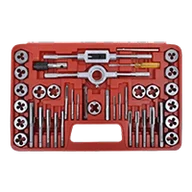 Taps & Dies
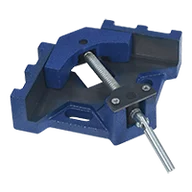 Tool Clamps & Vices
 Tool Sets
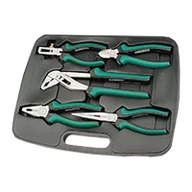 Wire & Cable Hand Tools
.png?sw=192) See all
 Bird Supplies
 Cat & Dog Flaps
 Cat Supplies
 Dog Supplies
 Fish Supplies
 Pet Biometric Monitors
 Pet Bowl Mats
 Pet Bowls, Feeders & Waterers
 Pet Carriers & Crates
 Pet Grooming Supplies
 Pet Leads
 Pet Playpens
 Pet Pushchairs & Strollers
 Pet Steps & Ramps
 Pet Training Aids
 Pet Waste Bags
 Reptile & Amphibian Supplies
 Small Animal Supplies
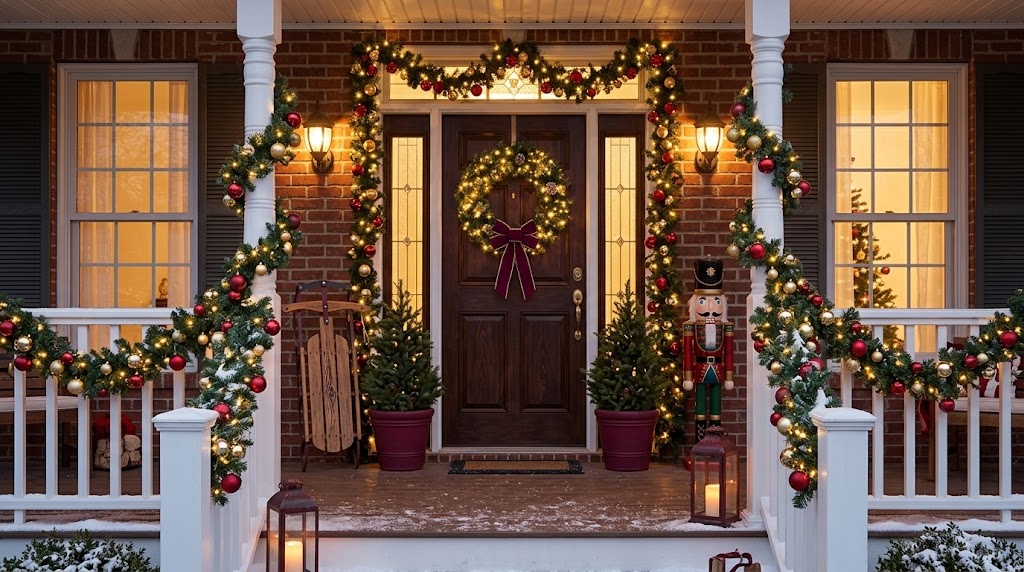
As daylight wanes and winter sets in, hanging festive lights and styling a front porch does far more than boost curb appeal – it acts as an active boost for seasonal mental health. Environmental psychology reveals that transforming home exteriors with warm illumination, biophilic greenery, and nostalgic jewel tones directly counteracts shorter, darker days by triggering dopamine release and regulating mood. Far from mere commercial hype, outdoor Christmas styling has evolved into a vital ritual for building winter resilience and turning cold facades into comforting, mood-boosting sanctuaries.
Every year, as October draws to a close, a distinct and predictable shift sweeps across neighbourhoods: long before the first frost settles or holiday travel begins, searches for outdoor Christmas decorations skyrocket, hardware store aisles transform into winter wonderlands, and homeowners begin untangling strings of lights. This annual "November Rush" is often dismissed as commercial overeagerness or premature holiday hype. However, environmental psychologists and behavioural researchers suggest a far more profound motivation – early decorating is a proactive response to the seasonal shift, bringing low temperatures, reduced daylight, and an impulse to retreat.
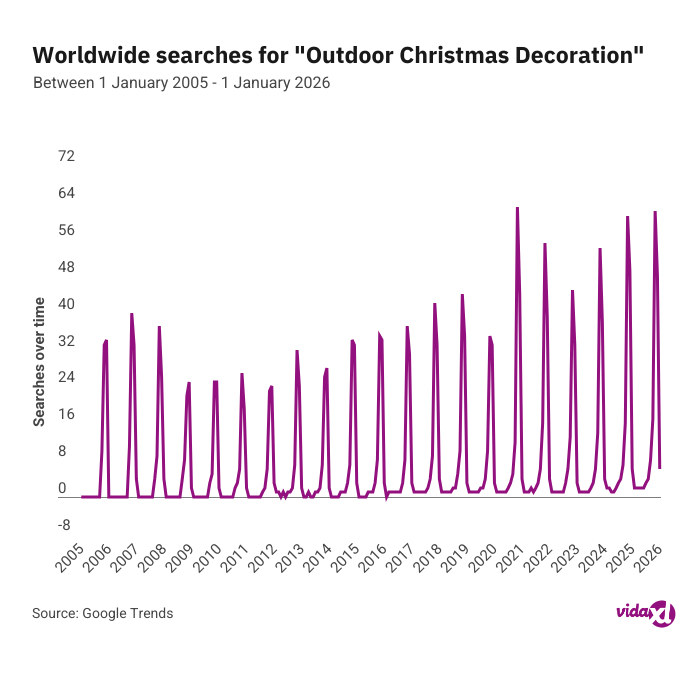
This behavioural phenomenon is vividly illustrated by global search data spanning 2005 through 2026. Historical search volume for "Outdoor Christmas Decoration" demonstrates a consistent, rhythmic pattern: sharp, needle-like spikes erupting every single winter without fail. Beyond the regular seasonal timing, the data highlights a clear long-term upward trend over the past two decades. Search interest reached historically high peaks beginning in 2020–2021 – climbing past an index of 60 – and has maintained these high levels straight through late 2025 and early 2026.
The dominant design motif for 2026 relies on classic holiday nostalgia. Front porches across the country are being styled like vintage storybooks, featuring weathered wooden sleds propped against brick entryways, life-sized traditional nutcrackers standing guard at front doors, classic brass bells, and oversized, sweeping bows crafted from heavy velvet.
By incorporating these traditional accents, front porches tap directly into visual cues linked to personal memory. Seeing objects associated with childhood traditions activates brain pathways tied to emotion and reward, boosting mood and fostering feelings of warmth and continuity (Routledge et al.). Furthermore, research in social psychology shows that this nostalgia acts as an emotional buffer against cold-weather loneliness, promoting psychological resilience when winter days feel isolated (Sedikides et al.).
Alongside this psychological support, festive styling also addresses the biological toll of the season. As natural daylight decreases in late fall, reduced light exposure alters brain chemistry. The brain often decreases its production of serotonin – a key neurotransmitter that regulates mood, energy, and focus – while overproducing melatonin, the hormone responsible for sleep (National Institute of Mental Health). This shift throws off the body's internal biological clock, driving winter lethargy and Seasonal Affective Disorder (SAD) (Mayo Clinic).
To counteract this seasonal slump, warm and bright outdoor displays function as a form of sensory light therapy. When light from these displays enters the eyes, it stimulates specialised intrinsically photosensitive retinal ganglion cells. These cells signal the brain’s hypothalamus to suppress melatonin production and stimulate serotonin synthesis. Ultimately, stepping outside into a warmly lit, nostalgically styled entryway provides essential stimulation that helps brighten the mood on even the greyest winter days.
Colour plays a foundational role in how human beings perceive and experience physical environments. For several years, winter curb appeal leaned heavily into crisp monochrome – stark white lights paired with cool silver and icy blues. While clean and modern, these cold palettes often mirrored the bleak, frozen landscapes of midwinter, unintentionally amplifying feelings of sterility and coldness.
Shifting away from this sterile aesthetic, the 2026 season introduces a deeply saturated colour palette dominated by burgundy, merlot, plum, forest emerald, and warm sapphire. These rich jewel tones bring a sense of dramatic warmth, luxury, and grounded comfort to home exteriors.
Beyond pure visual appeal, this shift leverages the principles of chromotherapy – the study of how specific colour wavelengths influence human emotion and physiological arousal. Red and deep red-purple wavelengths (such as burgundy and merlot) are especially stimulating; they naturally draw the eye, increase visual interest, and evoke subconscious feelings of physical warmth, cosy firesides, and rich hospitality.
When applied to outdoor wreaths, doorway draping, and exterior ornaments, deep jewel tones act as a vivid visual counterweight to the grey, monochromatic backdrop of late fall and winter. By injecting deep, high-contrast warmth into the front yard, homeowners create an immediate visual haven that makes returning home at dusk feel inviting rather than bleak.
Another key pillar of 2026’s outdoor design movement is greenery. This trend taps directly into biophilic design – the physiological and psychological need for human beings to connect with natural elements. During winter, when cold weather forces people to spend up to 90% of their time indoors, access to greenery drops. This sensory deprivation can increase stress hormones like cortisol and exacerbate feelings of confinement and winter depression.
Incorporating plant elements – either natural or faux variants – on front porches and entryways acts as a sensory anchor (Ulrich et al.). And looking out a front window at a lush, natural pine wreath dusted with snow offers a daily connection to living nature, grounding the mind and reinforcing feelings of vitality when the rest of the natural world appears dormant.
Winter naturally encourages retreat. As temperatures plunge, social gatherings shift indoors, outdoor exercise decreases, and physical isolation becomes a reality for many. Left unchecked, this seasonal withdrawal can easily spiral into winter depression and chronic loneliness.
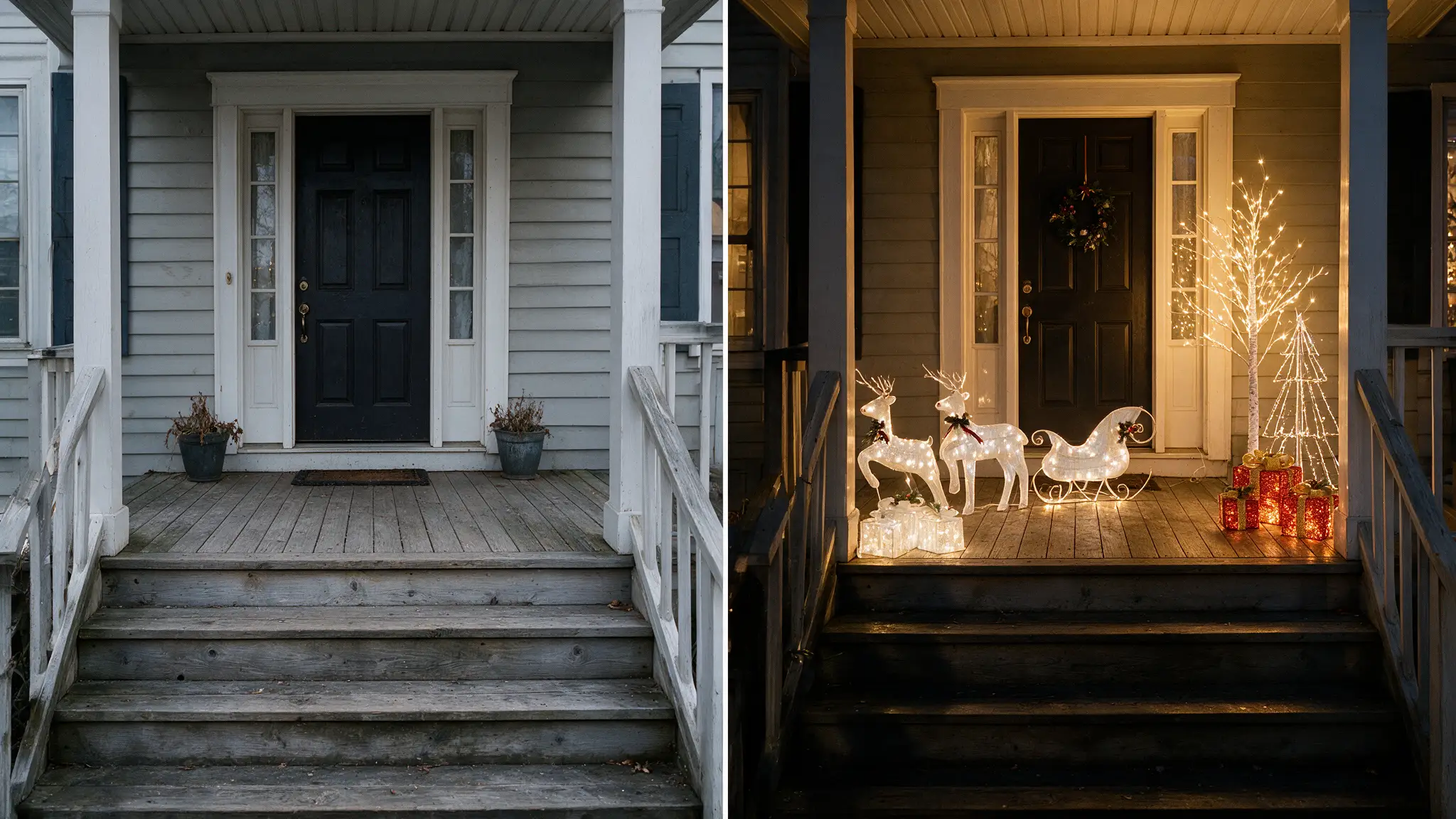
Transforming a home's exterior serves as an active, therapeutic defence against this seasonal slump. The very act of decorating provides a purposeful, hands-on project during November – a month often plagued by seasonal transition anxiety. Planning a display, climbing a ladder, arranging greenery, and testing lights requires physical movement, problem-solving, and creative focus. During this initial setup phase, physical activity and task focus actively lower cortisol levels while boosting endorphins and dopamine, turning a dark, routine afternoon into a rewarding accomplishment.
This therapeutic progression continues long after the lights are hung. Arriving home to an illuminated exterior creates an immediate visual and neurochemical shift, helping the brain transition from workday stress toward feelings of sanctuary and security. Furthermore, the combination of ambient outdoor lighting and rich visual colours acts as a shield against seasonal isolation, counteracting social withdrawal by turning cold, dark facades into vibrant, welcoming environments.
Ultimately, an illuminated, thoughtfully decorated exterior fundamentally alters the daily experience of returning home. Arriving back at a dark, unlit house after a long workday in midwinter can subconsciously reinforce feelings of fatigue, isolation, and gloom. Conversely, turning into a driveway illuminated by champagne-toned lights, warm merlot ribbons, and fragrant pine wreaths creates an instant neurological shift. The brain interprets the lit sanctuary as a place of safety, comfort, and warmth, offering a reliable surge of emotional relief at the end of every winter day.
Here is a quick breakdown of how these specific outdoor design choices directly support your winter well-being:
| Design Element | Recommended Style | Psychological Benefit |
|---|---|---|
| Warm Illumination | Uses Champagne, Soft White LED lighting to create a welcoming and consistent glow. | Regulates circadian rhythm; acts as daily sensory light therapy during dark months. |
| Vintage Accents | Incorporates brass bells, traditional nutcrackers, and classic storybook decorations. | Triggers nostalgia; buffers against seasonal isolation and winter loneliness. |
| Deep Jewel Tones | Rich palettes dominated by merlot, burgundy, and warm sapphire. | Provides chromotherapy; evokes subconscious feelings of physical warmth and luxury. |
| Biophilic Greenery | Layers of faux pine wreaths and evergreen garlands around doors and railings. | Lowers cortisol; satisfies the human need for nature when spending more time indoors. |
Translating these therapeutic design principles into your own outdoor space doesn't require a professional styling crew – it simply takes the right elements to build your visual haven. The extensive Christmas collection at vidaXL makes it effortless to curate an exterior display that supports both your seasonal well-being and your home's curb appeal.
Whether you want to construct a light-filled entryway or introduce grounding natural textures, vidaXL offers accessible, durable decor designed to withstand the winter elements:
By thoughtfully layering warm lights, vibrant greenery, and nostalgic touches from vidaXL, you can prepare your house for the holidays and create a comforting, dopamine-boosting sanctuary that brightens the dark months and welcomes you home with warmth all winter long.
National Institute of Mental Health. "Seasonal Affective Disorder." U.S. Department of Health and Human Services, National Institutes of Health, www.nimh.nih.gov/health/topics/seasonal-affective-disorder.
Routledge, Clay, et al. Nostalgia: A Psychological Resource. Routledge, 2015.
"Seasonal Affective Disorder (SAD)." Mayo Clinic, Mayo Foundation for Medical Education and Research, www.mayoclinic.org/diseases-conditions/seasonal-affective-disorder/symptoms-causes/syc-20364651.
Sedikides, Constantine, et al. "Nostalgia: Past, Present, and Future." Current Directions in Psychological Science, vol. 17, no. 5, 2008, pp. 304–307.
Ulrich, Roger S., et al. "Stress Recovery During Exposure to Natural Environmental Experiences." Journal of Environmental Psychology, vol. 11, no. 3, 1991, pp. 201–230.